STCs now cover commercial solar up to 1MW. Here’s why it matters
From 1 October 2026, commercial solar systems from 100kW to 1MW can claim upfront STCs. What changed, what it is worth for a Perth business, and why now is a good time to look at commercial solar.
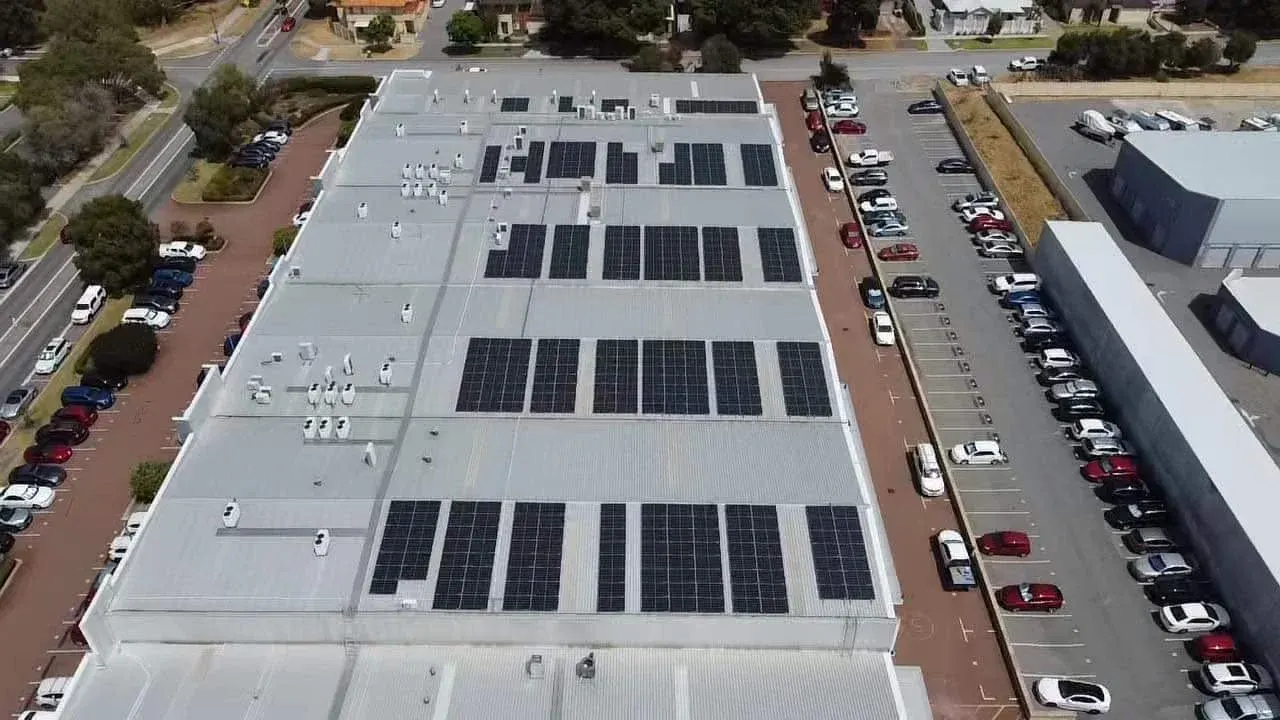
For years there was a hard line at 100kW. Systems below it got an upfront discount through small-scale technology certificates (STCs). Anything bigger was pushed into the large-scale scheme, where certificates are earned slowly over time based on generation. That made the jump from a 99kW system to a 200kW or 500kW system far less attractive than it should have been.
That line has now moved. From 1 October 2026, solar systems between 100kW and 1MW can claim STCs upfront, according to the Clean Energy Regulator. For warehouses, factories, schools, farms, clubs and multi-site businesses, it is the biggest change to commercial solar economics in a long time.
What changed
- The size limit went from 100kW to 1MW. The federal Renewable Energy Target scheme now treats systems above 100kW and up to 1MW as “mid-scale solar” under the Small-scale Renewable Energy Scheme.
- The discount is upfront. Like a home system, the STC value comes off the project price at the start, rather than trickling in from large-scale certificates over years.
- A fixed 5-year deeming period. The Clean Energy Regulator confirms mid-scale systems get a fixed five years of deemed generation, while systems under 100kW keep stepping down towards 2030.
- The 1MW limit is per site. Existing solar on the site counts towards it. If the total goes over 1MW, the new system falls outside the mid-scale pathway.
- STCs or REGO, not both. Owners can take the upfront STCs or create Renewable Electricity Guarantee of Origin certificates instead. Choosing STCs rules out REGO certificates for the deeming period.
Systems must use Clean Energy Council approved components and be installed to Solar Accreditation Australia guidelines. The install date is what counts, not the date you sign. STC applications for mid-scale systems are expected to open in mid to late November 2026, and systems installed from 1 October will be able to apply once they do.
What it’s worth for a Perth business
STCs for solar are calculated from the system size, the zone rating for your location and the deeming period. Perth sits in zone 3, one of the better solar zones in the country. Using an STC price of $40 as an example:
| System size | Approx. STCs | Approx. upfront value |
|---|---|---|
| 150kW | ~1,035 | ~$41,000 |
| 250kW | ~1,725 | ~$69,000 |
| 500kW | ~3,455 | ~$138,000 |
| 1MW | ~6,910 | ~$276,000 |
These are estimates only. STC prices move with the market, and the final number depends on the exact system and install date. Your proposal will show the real figure. The government expects the change to cut the cost of eligible commercial systems by around 20%.
Why now is a good time to look at it
- Payback just got shorter. Taking a fifth off the upfront cost brings payback forward on systems that already made sense, and makes some sites viable that weren’t before.
- You no longer have to stop at 99kW. Many businesses capped their system at 99kW just to get the STCs, leaving roof space and savings on the table. You can now size to what the site actually uses.
- Expansions can qualify. If you already have a 99kW system, adding capacity may be eligible, as long as the site total stays within 1MW.
- The scheme still ends in 2030. The 5-year deeming period is fixed, but the scheme itself is scheduled to finish in 2030. Every year you wait is another year of full-price grid power, and less time left in the scheme.
- Lead times will grow. Design, Western Power approval and equipment supply take time on larger systems. As demand picks up nationally, getting your project designed and in the queue early helps.
Batteries can be added too
The federal Cheaper Home Batteries Program also covers non-residential premises, with STCs on the first 50kWh of usable capacity. For businesses with evening loads or high demand charges, a battery alongside a mid-scale system is worth modelling.
Size it on your data, not the rebate
A bigger rebate doesn’t make a bigger system right for every site. The best commercial results come from matching solar to when you actually use power. We start with your interval data, meter by meter where a site has more than one, and look at demand charges, export limits and your switchboards before recommending a size.
Infinity has delivered commercial and government solar for clients including Hitachi Rail, the Department of Housing and Works and the Public Transport Authority. See our commercial solar services, or send us 12 months of bills and we’ll run the numbers.
Common questions
Does my existing commercial solar count towards the 1MW limit?
Yes. The limit applies to total solar capacity on the site. If your existing and new systems combined stay within 1MW, the new capacity may be eligible.
When can STCs be claimed for systems over 100kW?
Systems installed from 1 October 2026 are eligible. The Clean Energy Regulator expects applications for mid-scale systems to open in mid to late November 2026.
Can I still get LGCs or REGO certificates instead?
Systems from 100kW to 1MW can choose upfront STCs or REGO certificates. If you take STCs, you cannot create REGO certificates for the 5-year deeming period.
How is the STC value worked out?
It is based on system size, your location's zone rating and the 5-year deeming period, multiplied by the STC market price at the time. Perth is in zone 3.